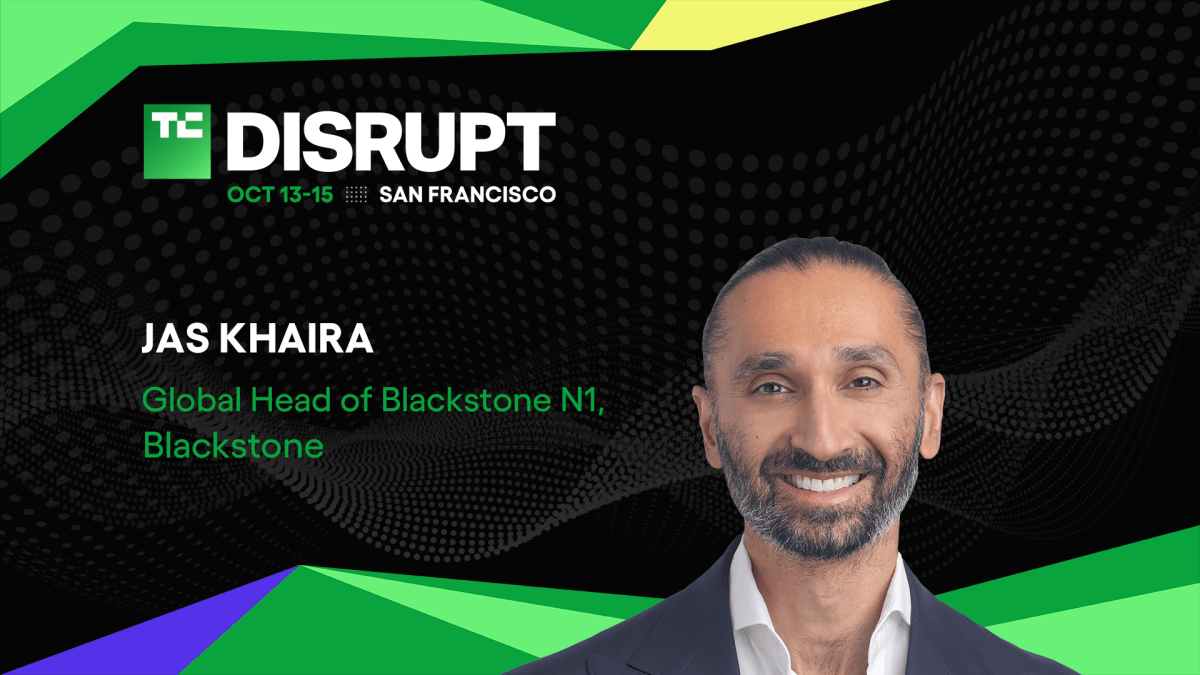
At TechCrunch Disrupt 2026, Blackstone N1's Jas Khaira will break down how AI founders should think about capital, infrastructure, and building companies that endure.
The Capital Intensity of AI Scaling
AI startups can grow at a speed that would have been difficult to imagine a generation ago. But rapid growth brings a harsh reality: scaling AI often requires enormous amounts of capital. Founders must make financing decisions long before they know whether early momentum will turn into an enduring business. The question that separates the winners from the fast followers is not simply who can raise the most, but who can convert capital into durable competitive advantage.
Jas Khaira Takes the Builders Stage at Disrupt 2026
At TechCrunch Disrupt 2026, Jas Khaira, global head of Blackstone N1, will speak on the Builders Stage in a session titled "Building the Next Generation of AI Giants." He will share what Blackstone looks for when backing category-defining companies, how founders should think about capital as they scale, and what distinguishes lasting businesses from early traction. The right capital can fund the infrastructure, talent, and expansion needed to compete. But raising more money is not the same thing as building a stronger company.
Raising more money isn't the same thing as building a stronger company.
The Scale of AI Infrastructure Bets
Building an AI company often means financing more than product development and customer acquisition. Compute, data centers, and other infrastructure can add significant capital requirements as companies grow. One recent Blackstone investment illustrates the scale. Blackstone and co-investors agreed to invest up to $600 million in primary equity in Indian AI infrastructure company Neysa, which planned to raise an additional $600 million in debt financing. Capital is also flowing into AI implementation. In July, Anthropic launched Ode with Anthropic, an AI implementation company backed through a $1.5 billion joint venture with Blackstone, Hellman & Friedman, Goldman Sachs, and others.
What Separates AI Giants from Fast Growers
Those investments put Blackstone close to some of the biggest questions surrounding AI growth: where capital is needed, which opportunities warrant it, and what businesses have the potential to endure. Fast growth can attract customers, employees, and investors. Khaira will look beyond that early momentum to what makes a business endure and what Blackstone considers when evaluating the next generation of category-defining companies.
The Founder's Dilemma: Speed vs. Durability
Rapid growth can force big financing decisions early. Founders may be raising capital while simultaneously building products, hiring teams, competing for customers, and determining whether the advantages driving today's growth can hold up over time. That balancing act is not just about survival; it is about designing a capital structure that matches the long-term architecture of an AI business.
For founders approaching the point where growth requires significantly more capital, the conversation at Disrupt 2026 will offer a rare look into how one of the world's largest alternative asset managers evaluates the companies trying to become AI's next giants. The insights will focus on the decisions that come with scaling and the discipline required to turn early traction into an enduring franchise.
TechCrunch Disrupt 2026 will bring together founders, investors, and tech leaders. Khaira's session is aimed at those who want to understand the capital playbook behind the next generation of AI giants.