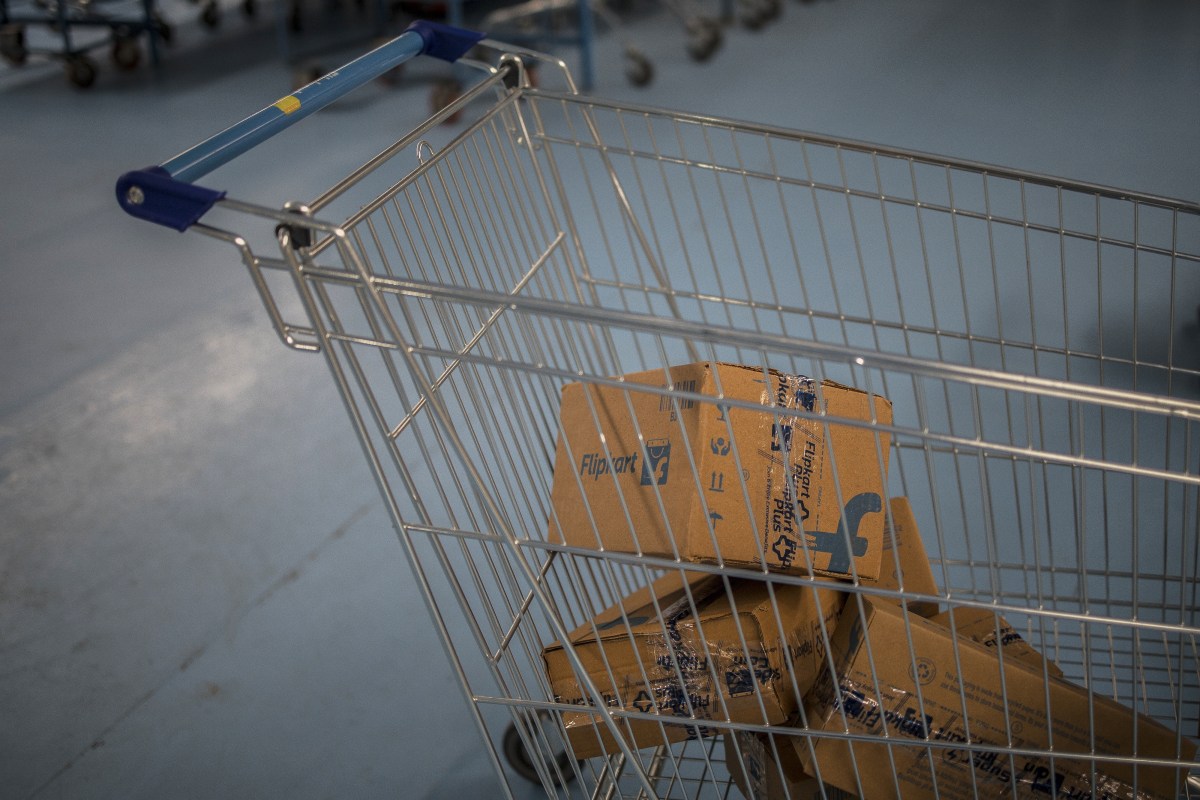
Google is testing a Buy button that lets Indian users purchase Flipkart products inside Gemini and AI Mode, ahead of a wider October rollout.
From Product Discovery to Actual Transactions
Google has started testing a way for shoppers in India to buy products from Walmart-owned Flipkart directly through Gemini and AI Mode, according to TechCrunch reporting. The experiment marks a meaningful shift in strategy for the search giant: instead of stopping at answering shopping queries and recommending products, Google is now inserting itself into the checkout itself.
The test is deliberately narrow. Users included in the experiment see a "Buy" button on select Flipkart product listings surfaced inside Gemini and Google's AI Mode. Tapping that button launches a Flipkart checkout flow, letting the shopper complete a purchase without ever leaving the AI interface. Everyone else continues to see the familiar product listings with no purchase option attached.
Inside the limited test
- A "Buy" button appears on select Flipkart listings rendered in Gemini and AI Mode.
- Tapping it opens a Flipkart-branded checkout flow rather than redirecting the user to a separate browser tab or app.
- Availability is restricted to some users and a small selection of products, including smartphones, electronics, and mobile accessories.
- Users outside the test cohort still see standard Flipkart listings, minus the direct purchase capability.
Google plans to roll the experience out more broadly later in October, ahead of India's festive shopping season, according to people familiar with the matter.
The Infrastructure: Universal Commerce Protocol
The Flipkart test does not stand alone. Earlier this year, Google introduced the Universal Commerce Protocol (UCP), an open standard designed to let AI agents interact with retailers across the entire shopping journey, checkout included. At the time, Google said the technology would allow shoppers to buy eligible products through Gemini and AI Mode using a Google-hosted checkout experience. The company has since expanded UCP with additional capabilities, among them the ability to hand items off to a retailer's own site to finish the purchase.
Asked about the Flipkart test, a Google spokesperson said the company is "always testing new features and experiences to help people discover and connect with businesses more easily." Google regularly runs experiments and has no further details to share, the spokesperson added.
Flipkart-branded checkout versus Google-hosted checkout
Notably, the Flipkart test appears to differ from the Google-hosted checkout experience the company demonstrated earlier. In the version observed by TechCrunch, tapping Buy brings up a checkout flow carrying Flipkart's branding. It is not clear what underlying technology powers the test.
Earlier in September, Google said Flipkart was among the merchants partnering with it to bring what it calls "agentic" shopping experiences to consumers in India, but it had not disclosed details of the test or its rollout timeline at that point.
Why India and Why Now
India is the world's second-largest internet market, with more than a billion internet subscribers, and it is one of the most fiercely contested battlegrounds in global e-commerce. Flipkart and Amazon compete aggressively for online shoppers throughout the year, and that competition intensifies sharply during the festive season, when e-commerce companies roll out some of their biggest sales and promotions of the year. Timing a broader rollout to that window gives Google a high-traffic proving ground for AI-driven transactions.
Google's relationship with Flipkart is not purely technological. The search giant invested roughly $350 million in the e-commerce company in 2024 as part of a funding round led by the U.S. retailer Walmart, taking a minority stake. That combination of investment and technology partnership gives Google an unusually tight integration path for testing transactional AI features.
Competitive pressure and open questions
The test lands as Google and rivals including OpenAI are layering commerce capabilities onto their AI offerings, all striving to move beyond answering shopping queries and recommending products toward playing a more direct role in online purchases. For now, the Buy option is not appearing across every retailer that Google's AI services surface. In the experience seen by TechCrunch, listings from rivals including Amazon appeared alongside Flipkart products but did not offer the option to purchase directly through the AI interface.
That asymmetry raises the central unresolved question: whether in-AI checkout becomes a broadly available protocol that any merchant can plug into, or a privileged channel for partners with deeper commercial ties to Google. The October expansion should offer the first real signal.