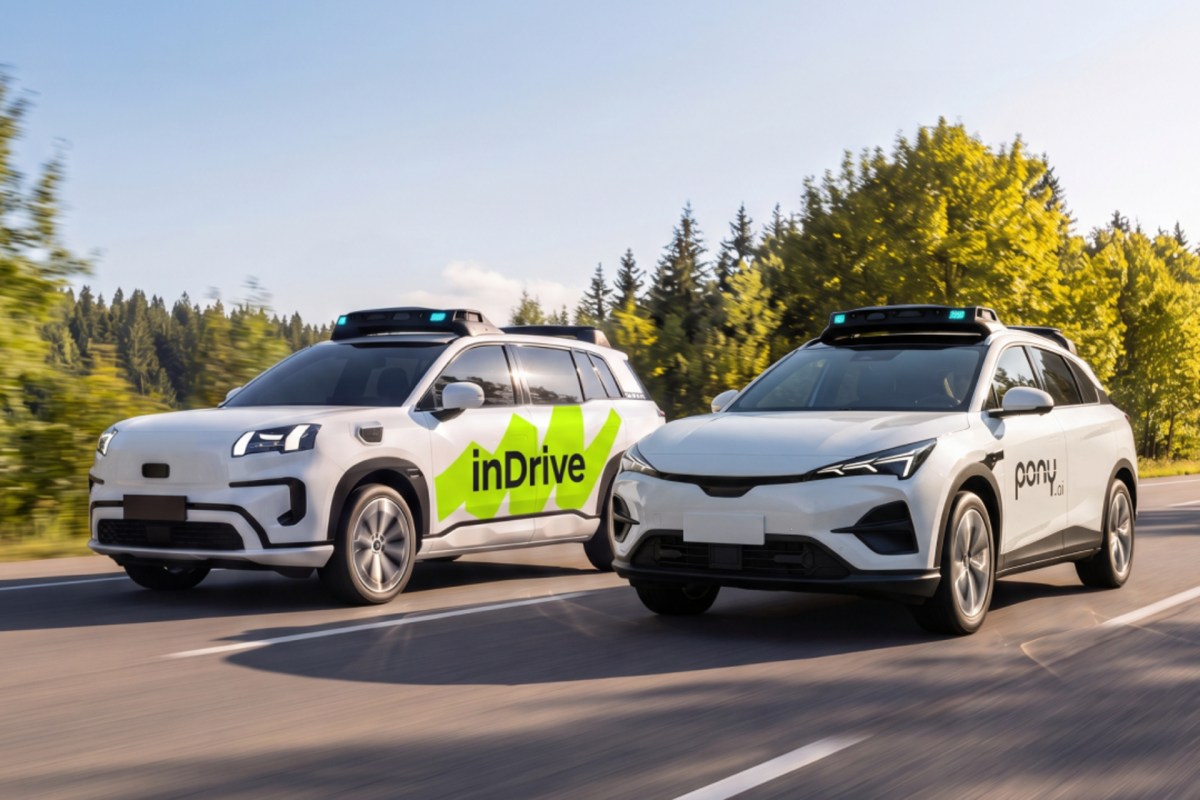
inDrive partners with Pony.ai and Nvidia to test robotaxis in Kazakhstan's capital Astana in 2027, marking a capital-light push into autonomous ride-hailing.
inDrive's Capital-Light Robotaxi Strategy
Ride-hailing company inDrive, known for letting passengers and drivers negotiate fares, is teaming up with Chinese autonomous driving firm Pony.ai and Nvidia to begin testing robotaxis in Kazakhstan in 2027. The companies signed a memorandum of understanding on Friday to explore bringing Pony.ai's robotaxis to inDrive's platform, reflecting growing interest in self-driving technology beyond the U.S. and China.
Testing will begin in Kazakhstan's capital, Astana, in the first half of 2027, inDrive CTO Yuri Misnik told TechCrunch. The tests will initially involve a safety operator, with fully driverless rides as the eventual goal. Under the proposed plan, Pony.ai would provide its Gen-7 robotaxis, which inDrive would offer through its ride-hailing app and operate in Kazakhstan. Nvidia would supply the AI technology, including its Hyperion platform and Halos safety system.
"Our approach is capital-light by design," said Misnik. "We work with a range of partners in different markets, combining their expertise with ours to deliver a better customer experience."
inDrive, which has built its business around affordable rides, is looking to bring a similar focus to autonomous ride-hailing as it explores a market where Uber and other rivals are already making moves. The move comes as ride-hailing companies expand their push into robotaxis. Earlier this month, Uber announced plans to test Pony.ai's robotaxis in London, where it has also started offering supervised autonomous rides with British startup Wayve, an investor-backed partner. Uber is also working with multiple robotaxi companies in other markets, including the Middle East.
Nvidia's Hyperion Platform and Cost Savings
Nvidia says its Hyperion platform could lower the cost of developing robotaxis by giving companies a ready-made foundation of sensors and computing technology, rather than requiring them to build and integrate everything themselves. The company also offers its Alpamayo model and tools to generate synthetic data and test autonomous driving systems across different driving scenarios.
"Those savings are particularly relevant in emerging markets, where ride-hailing is already relatively affordable and autonomous services need to compete on cost," Ali Kani, Nvidia's vice president of automotive, told TechCrunch.
The announcement coincides with Nvidia CEO Jensen Huang's first visit to Kazakhstan on Friday. The Kazakhstan proposal would also add to Pony.ai's ongoing push beyond China. The company aims to have more than 3,500 robotaxis operating in over 20 cities worldwide by the end of 2026, up from a fleet of 1,975 vehicles at the end of June.
Kazakhstan's Autonomous Vehicle Ambitions
Last month, Kazakhstan announced plans to launch autonomous taxi services in 2027, with initial trials planned in Astana and two other cities. It has also introduced rules for autonomous vehicles to be tested on certain public roads. This regulatory groundwork positions the country as an early adopter of autonomous mobility in Central Asia, potentially attracting further investment and partnerships.
The collaboration between inDrive, Pony.ai, and Nvidia highlights a growing trend of cross-border partnerships in the autonomous vehicle industry. By leveraging Pony.ai's robotaxi technology and Nvidia's AI computing, inDrive aims to offer affordable autonomous rides without heavy capital expenditure. As the 2027 testing phase approaches, the industry will watch closely to see if this capital-light model can succeed in emerging markets.