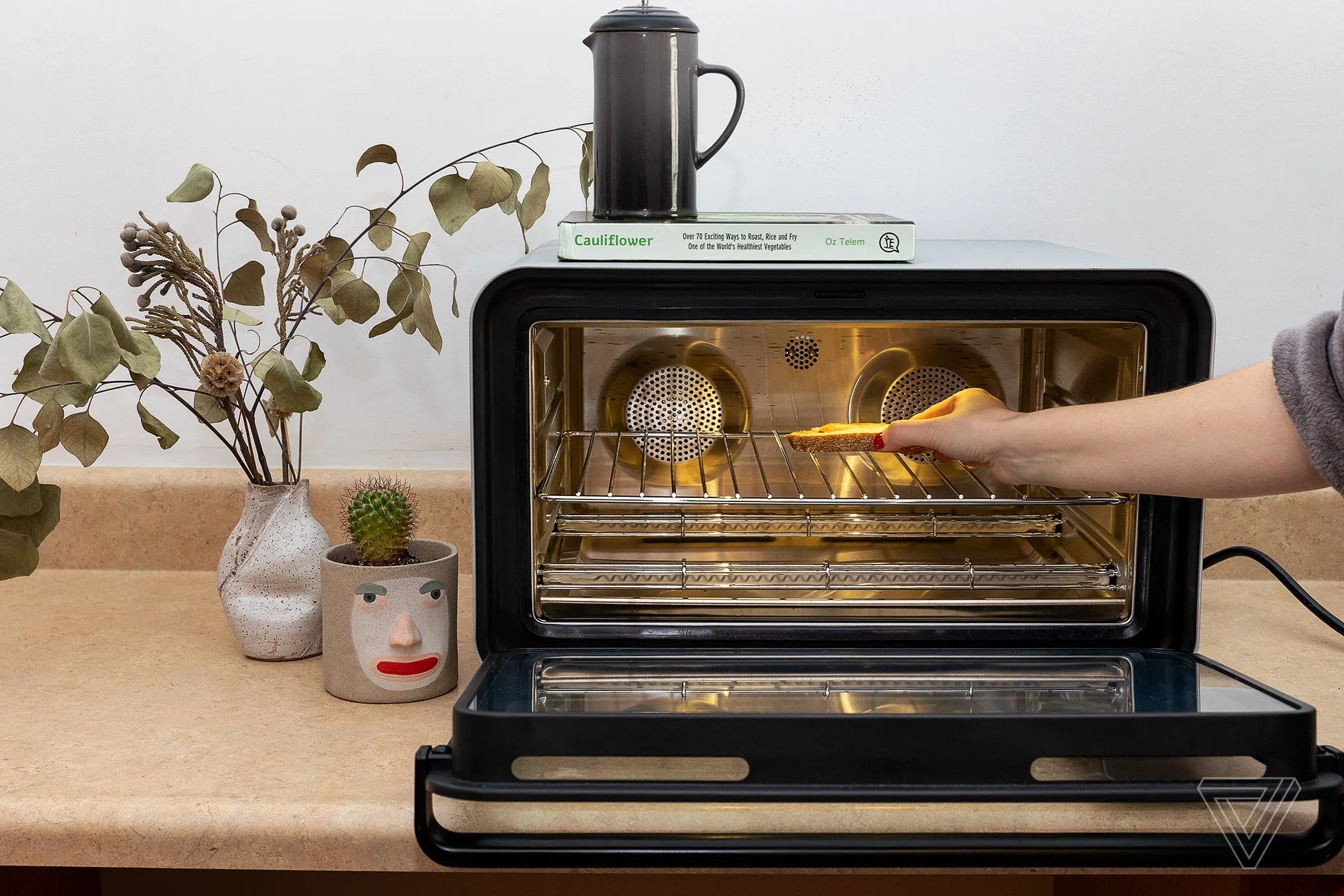
June Oven's cloud shutdown leaves users with a zombie appliance, exposing the risks of cloud-dependent smart home hardware and the need for local APIs.
The June Oven goes dark
A decade ago, a group of former Apple engineers built a beautiful smart oven. With a built-in scale, restaurant-grade heating elements, a camera, and the intelligence to recognize a chicken breast and cook it perfectly, the June Oven set the standard for smart cooking appliances. At $1,495, it was absurdly expensive, but it quickly grew a small, devoted following that expanded when the company introduced a more modestly priced model.
This past Tuesday, June went dark. Weber, which bought the company in January 2021 and stopped making the ovens in 2022, shut off the app and cloud services, leaving its users with a sleek-looking toaster oven. There will be no app control, no software updates, and no new AI food recognition to crisp that strudel perfectly. You can still use it as an oven, but there will be no support or parts, and if you have to factory reset it for some reason, that could be the nail in the coffin.
Weber told me it considered open-sourcing the technology for someone else to keep it alive, but decided against it, citing the fact June's IP is part of its Weber Connect platform.
A graveyard that keeps growing
June is just the latest in a depressingly long list of connected products that have arrived in the smart home graveyard in the last two years alone. The Nest Secure, early Nest Thermostats, Belkin's WeMo line, Neato's robot vacuums, the Brava smart oven, Logitech's Pop buttons, Bose's SoundTouch speakers, and Sengled's smart bulbs all lost their lifelines. While some were saved by local APIs and protocols — such as Zigbee, Thread, and Apple's HomeKit, or a Home Assistant integration — most are like the June Oven, destined to live out their days in a zombie state.
Why cloud dependence is the core failure
The technical problem is not that smart appliances are inherently fragile. It is that many of their most valuable features are implemented as cloud services rather than local capabilities. App control, firmware updates, AI food recognition, and remote diagnostics typically depend on a vendor-operated backend. When that backend is switched off, the hardware may still perform basic local functions, but the smart layer disappears. The device does not become repaired by the community; it becomes a reminder that the cloud was never ours to keep.
Local APIs and open protocols change that calculation. A device that exposes local control through Zigbee, Thread, Apple's HomeKit, or a Home Assistant integration can retain useful functionality even after the original vendor exits. It can be automated, monitored, and in some cases updated by a community. That is the difference between a product that degrades gracefully and one that becomes a zombie appliance.
What the June Oven shutdown teaches
- Buy for local control first: prioritize devices that work through Zigbee, Thread, HomeKit, or a documented local API rather than a vendor cloud alone.
- Ask about sunset plans: open-source commitments, local fallback modes, and parts availability matter as much as launch-day features.