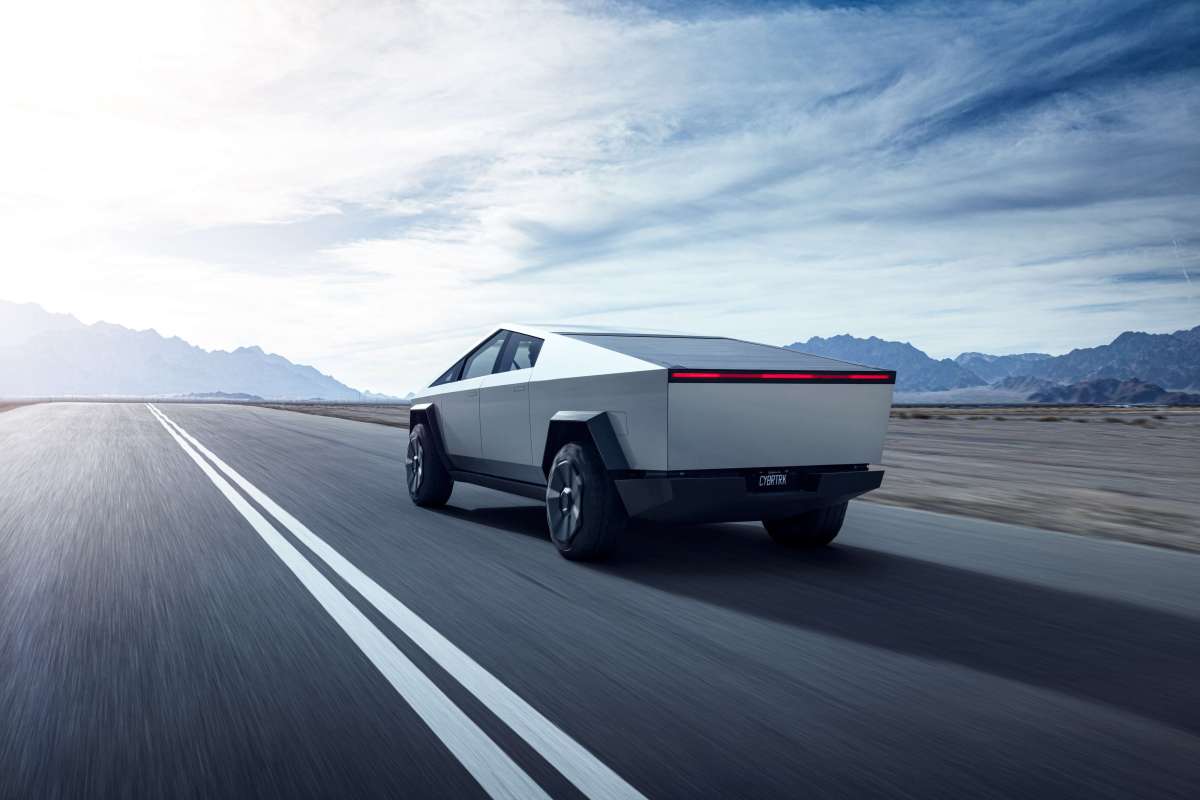
Tesla will end Cybertruck production in 2027 to focus on Cybercab robotaxis, marking the third product discontinued for AI and robotics ambitions.
A Bold Experiment Ends
In a surprising turn of events, Tesla has announced that it will cease production of the Cybertruck in 2027. The decision, revealed by CEO Elon Musk on X, comes after just a few years of underwhelming sales for the futuristic, steel-clad electric vehicle. Musk stated that the factory space currently used for the Cybertruck will be repurposed to manufacture more two-seater Cybercab robotaxis, accelerating Tesla's ambitions in autonomous ride-hailing.
When Musk handed over the first few Cybertrucks in late 2023, he predicted Tesla would sell around 250,000 per year. The vehicle was touted as a cornerstone of Tesla's future, with the company even referring to its Texas factory as the "Cybertruck factory" before construction began. However, Tesla has instead sold just tens of thousands of Cybertrucks in total over the last three years, a fraction of the initial projection.
From Hype to Hardship
First announced in 2019, the Cybertruck was a product Musk had long obsessed over. "Probably my personal favorite for the next product is the pickup truck, and we are going to just do an amazing pickup truck," he said on an earnings call that year. Musk promised a radical design inspired by cyberpunk sci-fi stories like Blade Runner. While the design certainly turned heads, the company overpromised on the basics from the start.
During the now-infamous reveal event in 2019, when head designer Franz von Holzhausen cracked the Cybertruck's windows with steel balls, Tesla said the EV would start at under $40,000 and have up to 500 miles of range. It achieved neither. Instead, the truck was delayed for two years, partly due to the Covid-19 pandemic. When it finally hit the market in late 2023, the base price had inflated to around $60,000, and the top-end range had shrunk by over 100 miles. Musk handed over the first few Cybertrucks in a short, somewhat odd event (by Tesla's standards) that saw a poorly-lit Musk standing in a truck bed promising the truck was "the finest in apocalyptic equipment" fit for "late civilization vibes."
The truck has struggled on the market ever since. Its polarizing design never seemed to sit well with buyers, especially at a higher-than-expected price. Then, during its first full year of sales in 2024, Musk became a major financial backer of Donald Trump, which turned the instantly recognizable Cybertruck into a target for protesters. That continued into 2025 as Musk led the so-called Department of Government Efficiency, which fired thousands of federal workers.
Pivoting to AI and Robotics
Tesla is killing off the Cybertruck at a moment when it is trying to become an AI- and robotics-focused company. A big part of that is its robotaxi ambitions. The company has spent the last two months putting Cybercabs on the streets in its hometown of Austin, Texas. With no major incidents to date, Tesla has said it plans to expand the Cybercab operations to other cities, starting with Dallas later this month. Tesla also operates robotaxi versions of its Model Y SUVs in Austin, Houston, and Dallas, as well as three cities in Florida.
This is the third product Tesla has discontinued in order to fuel those greater ambitions. Earlier this year, the company decided to end production of the Model S sedan and Model X SUV and instead use the factory space dedicated to those vehicles to make Optimus humanoid robots. The Cybertruck joins a growing list of casualties as Tesla redirects resources toward autonomous driving and robotics.
What It Means for Tesla's Future
The discontinuation of the Cybertruck underscores the challenges of bringing radical designs to market and the shifting priorities of Tesla's leadership. While the Cybertruck garnered significant attention, its commercial performance fell far short of expectations. By reallocating factory space to Cybercab production, Tesla is betting on a future where autonomous ride-hailing and robotics drive growth. The move also reflects Musk's focus on AI and automation as the next frontier for the company.
As Tesla continues to expand its robotaxi services and develop humanoid robots, the legacy of the Cybertruck may serve as a cautionary tale about the risks of overpromising and underdelivering. For now, the company is charging ahead with its vision of an AI-powered future, leaving the steel-clad pickup behind.